Is Busan cheaper than Seoul? We break down the international student budget to show you exactly how much you can save by going coastal.
Studying in Busan costs approximately 30% less than in Seoul, primarily driven by a 50% reduction in housing deposits and unique transit cashback programs like the Dongbaek Pass. While “Lunchflation” has affected all of South Korea, Busan remains a sanctuary for students because the “Seoul Premium” simply doesn’t apply here. You get the world-class infrastructure of Korea’s second-largest city with a price tag that allows your savings to go much further.
What You’ll Learn
- The Deposit Advantage: The “Deposit Barrier” is significantly lower in Busan, with security deposits (Bojungeum) starting at KRW 3 million to KRW 5 million (USD 2,100 to USD 3,500), whereas Seoul often requires KRW 10 million (USD 7,000).
- Monthly Rent: Expect to pay KRW 450,000 to KRW 600,000 (USD 315 to USD 420) for a modern private studio in student-friendly districts like Daeyeon or Sasang.
- Transport Cashback: The Dongbaek Pass offers up to KRW 45,000 (USD 30) in monthly refunds, effectively making your daily commute free if you are a frequent traveler.
- Food Value: University cafeterias (Hak-sik) still serve balanced meals for KRW 5,000 to KRW 7,000 (USD 3.50 to USD 4.90), shielding your budget from rising restaurant prices.
- Visa “Frozen Funds”: For 2026, regional universities typically require a lower bank balance (approx. KRW 16 million, USD 11,200) for D-2 visa issuance compared to Seoul’s KRW 20 million (USD 14,000) standard.
On this page:
Is Busan Expensive?
While Seoul is the heart of Korean media, Busan is the capital of coastal value, offering a “Main Character” lifestyle for nearly KRW 400,000 (USD 285) less per month than the capital.
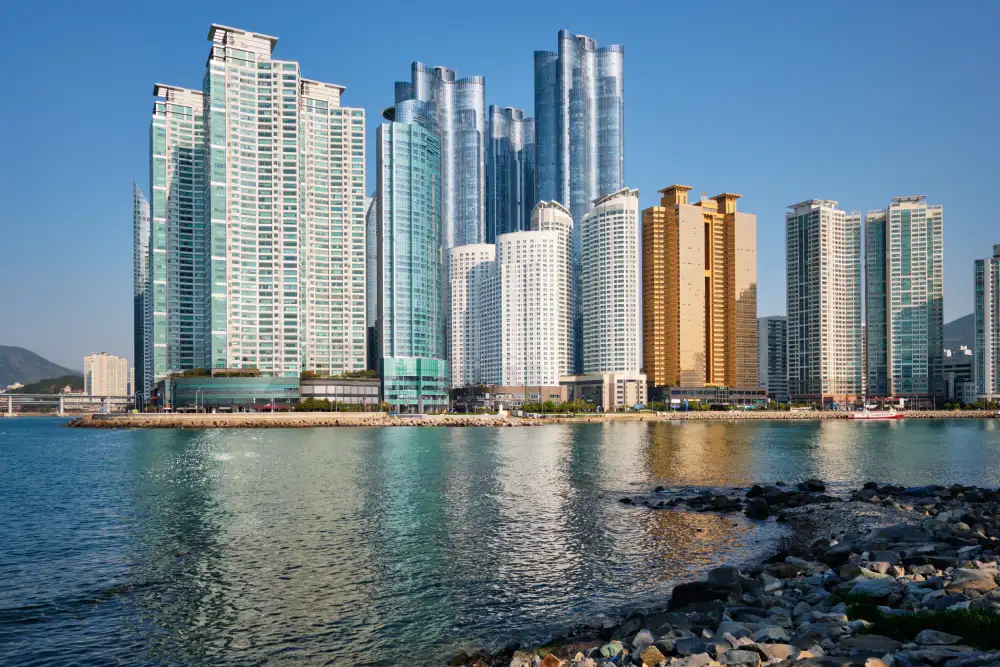
Busan is not “cheap” in the sense of lacking quality; rather, it offers a higher purchasing power for students. While a single person in Seoul might spend KRW 1.8 million to KRW 2.2 million (USD 1,260 to USD 1,540) monthly for a comfortable life, a student in Busan can achieve the same standard for KRW 1.1 million to KRW 1.4 million (USD 770 to USD 980). This includes the luxury of living in a private “One-room” near the beach rather than a cramped “Goshiwon” in a basement.
Monthly Housing Costs: The Bojungeum Win
The biggest financial win in Busan isn’t just the monthly rent; it’s the accessible security deposits that make independent living possible for self-funded students.
| Housing Type | Security Deposit (Bojungeum) | Monthly Rent (Wolse) | Best For |
| On-Campus Dorm | KRW 0 to KRW 200,000 (USD 140) | KRW 300,000 to KRW 500,000 (USD 210 to USD 350) | Ultimate Budgeting |
| Private One-Room | KRW 2 million to KRW 5 million (USD 1,400 to USD 3,500) | KRW 450,000 to KRW 600,000 (USD 315 to USD 420) | Independence (Silla/Kyungsung) |
| Officetel | KRW 5 million to KRW 10 million (USD 3,500 to USD 7,000) | KRW 600,000 to KRW 850,000 (USD 420 to USD 595) | Modern Luxury (Seomyeon) |
In Seoul, landlords often use high deposits to hedge against inflation. In Busan, especially in Sasang-gu (near Silla) and Daeyeon-dong (near Kyungsung), the market is much more student-friendly. You can often find a “clean, new-build” studio for a KRW 3 million (USD 2,100) deposit; a figure that is almost unheard of in the capital.
Pro Tip
Students fixate on monthly rent, but Bojungeum is the real barrier in Korea. Busan’s lowering of this barrier is the actual financial advantage.
Food & Dining: Navigating “Lunchflation” in the South
While central districts like Seomyeon have seen price hikes, university areas still offer hearty meals for under KRW 8,000 (USD 5.50), roughly 25% cheaper than equivalent student areas in Seoul.
Busan’s maritime economy keeps local markets (Sijang) incredibly competitive.
- University Cafeterias (Hak-sik): Your safest bet for a KRW 6,000 (USD 4.20) meal.
- Local Specialties: Busan is famous for Dwaeji Gukbap (Pork Soup). A filling bowl in a student district still costs around KRW 8,000 to KRW 9,000 (USD 5.60 to USD 6.30), compared to KRW 11,000+ (USD 7.70+) in Seoul.
- Grocery Tip: Shop at traditional markets like Gijang or local marts in Sasang rather than high-end department stores to save up to KRW 150,000 (USD 105) a month on groceries.
Transport & Utilities: The Dongbaek Pass Advantage
Unlike Seoul’s flat-rate Climate Card, Busan’s Dongbaek Pass rewards frequent travelers with direct cashback that can be spent at local cafes and convenience stores.
The math is simple: if you spend more than KRW 45,000 (USD 31.50) on the metro or bus, the city refunds the difference up to KRW 45,000 (USD 31.50).
- Public Transport: KRW 1,500 to KRW 1,700 (USD 1.05 to USD 1.19) per ride.
- Utilities (Management Fee): Usually KRW 50,000 to KRW 100,000 (USD 35 to USD 70), including internet and water.
- Heating & Cooling: Busan’s winters are milder than Seoul’s, meaning your Ondol (floor heating) bill in January will likely be 20% lower than a friend’s in the north.
Cost of Living in Busan vs. Seoul
If you move your studies from Seoul to a regional city like Busan, you unlock significant savings without sacrificing the quality of education.
| Cost Category | Busan | Seoul | The Difference |
| Average Rent (Studio) | KRW 450,000 to 600,000 (USD 300 to USD 420) | KRW 700,000+ (USD 490+) | ~35% Cheaper |
| Housing Deposit | KRW 3 million to 5 million (USD 2,100 to USD 3,500) | KRW 10 million (USD 7,000) (Standard) | ~50% Lower Barrier |
| Lunch (University Area) | KRW 7,000 to KRW 10,000 (USD 5.50 to USD 7) | KRW 9,500 to KRW 12,000 (USD 7 to USD 8) | ~25% Cheaper |
| Transport | KRW 1,500 to KRW 1,600 (USD 1 to USD 1.20) | KRW 1,550 (USD 1.10) (Base Fare) | Marginal Savings |
Did you know?
International students in Busan can save 25–35% on living costs compared to Seoul, mainly due to lower housing deposits, cheaper student-area rent, and public transport cashback programs like the Dongbaek Pass.
FAQ About Cost of Living in Busan
-
Is Busan expensive for international students?
Generally, no. It is considered one of the most affordable major cities in East Asia for students, offering a high-tech lifestyle for a regional price.
-
How much is house rent in Busan compared to Seoul?
Monthly rent is about 30% lower, but the real saving is the deposit (Bojungeum), which is often 50–70% lower than in Seoul.
-
Is Busan cheaper than Seoul for students?
Yes. Between the lower rent, tuition fees, and transport refunds, a student in Busan saves roughly KRW 4 million to KRW 6 million (USD 2,800 to USD 4,200) per year compared to a student in Seoul.
-
How much do I need to live comfortably in Busan as an international student?
Most international students need KRW 1.1 million to KRW 1.4 million (USD 770 to USD 980), excluding tuition. This includes the luxury of living in a private “One-room” near the beach, food, transportation, utilities, and basic leisure. However, it does not include the upfront housing deposit.
-
Is anyone eligible for the Busan Dongbaek Pass?
The Dongbaekjeon Prepaid Transportation Card is available to anyone aged 18 and above. However, 18-year-olds must pay adult fares to be eligible for Dongbaek Pass records and refunds. A separate Youth Dongbaek Pass (ages 13–18, youth fares) is also available with its own refund policy.
In Summary: Cost of Living in Busan for International Students
Studying in Busan is the smartest financial move for 2026. By choosing the “Busan Value,” you aren’t just saving money; you’re buying a better lifestyle with beach access and lower financial stress.
Worried about the KRW 10 million (USD 7,000) deposits in Seoul? Contact us for a free consultation on finding student-friendly housing in Busan with deposits as low as KRW 2 million (USD 1,400).
Found your budget? Now find your neighborhood in our Busan Housing District Guide.