From housing deposits to the rising reality of “Lunchflation,” here is a detailed breakdown of the cost of living in Seoul to help you budget for your studies.
Studying in Seoul is an investment in your future, but for many international students, the “Seoul Premium” can be a shock. While the city is significantly more affordable than New York or London, it is the most expensive city in South Korea. To live comfortably without financial stress, a typical student in 2026 needs a monthly budget of KRW 1,000,000 to KRW 1,617,000 (USD 700 to USD 1,135), excluding tuition.
For a broader look at universities, culture, and lifestyle in the capital, read our complete guide to studying in Seoul.
What You’ll Learn
- The Seoul Premium: How rent in Seoul impacts budgeting as a student.
- Lunchflation Reality: The reality of rising food costs in central areas, and what this means for your monthly food budget.
- Key Money Explained: What housing deposits really mean, and why this upfront cost surprises many international students.
- Transport Savings: How transportation initiatives in Seoul can dramatically reduce commuting costs with unlimited public transport for a fixed monthly fee.
- Seoul vs Regional Cities: A clear comparison of living costs, lifestyle, and financial pressure between Seoul and cities like Busan or Daegu.
- The “Gwanlibi” Surprise: Don’t look at just the rent price. In Korea, you must pay a separate “Maintenance Fee” (Gwanlibi), which can add KRW 50,000 to KRW 150,000 (USD 35 to USD 105) to your monthly bill. This often includes internet and building cleaning, but usually excludes gas and electricity.
- The Part-Time Wage Gap: The minimum wage (KRW 10,320) barely covers lunch. While you can work part-time (after 6 months), do not rely on a cafe job to cover your rent. Most student wages are supplemental, not foundational.
On this page:
Is it expensive to live in Seoul compared to other cities?
Seoul offers a high-tech, high-energy lifestyle that is cheaper than the US or UK, but 20 to 30% more expensive than regional Korean cities like Busan or Daegu.
In 2026, Seoul remains a “value” choice for Western students but a “premium” choice for those already in Asia. While you might save on public transport and healthcare compared to NYC, you will pay significantly more for fresh produce and “Key Money” deposits than you would in other parts of Korea.
Cost of Living in Seoul Compared to Major International Cities
| City | Monthly Budget (Rent + Essentials) | Comparison to Seoul |
| Tokyo | USD 770 to USD 1,250 | ~10% More Expensive |
| New York City | USD 1,350 to USD 2,150 | ~190% More Expensive |
Cost of Living in Seoul vs. Busan vs. Daegu
If you move your studies from Seoul to a regional city like Busan or Daegu, you unlock significant savings without sacrificing the quality of education.
| Cost Category | Seoul | Busan/Daegu (The Savings) | The Difference |
| Average Rent (Studio) | KRW 700,000+ (USD 490+) | KRW 450,000 to 600,000 (USD 300 to USD 425 | ~35% Cheaper |
| Housing Deposit | KRW 10 million (USD 7,000) (Standard) | KRW 3 million to 5 million (USD 2,100 to USD 3,500) | ~50% Lower Barrier |
| Lunch (University Area) | KRW 9,500 to KRW 12,000 (USD 7 to USD 8) | KRW 7,000 to KRW 10,000 (USD 5.50 to USD 7) | ~25% Cheaper |
| Transport | KRW 1,550 (USD 1.10) (Base Fare) | KRW 1,500 to KRW 1,600 (USD 1 to USD 1.20) | Marginal Savings |
The “Deposit Barrier”
The biggest financial difference isn’t just the monthly rent. It’s the security deposit. In Seoul, finding a decent studio for under a KRW 10 million (USD 7,000) deposit is becoming incredibly difficult. In contrast, landlords in university districts in Busan or Daegu often accept KRW 2 million to 3 million (USD 1,400 to USD 2,100), making it far easier for self-funded students to sign a lease.
Pro Tip
If your budget is tight, choosing a university in a regional city can effectively give you a 30% discount on your entire study abroad experience.
What is the total estimated monthly cost in Seoul?
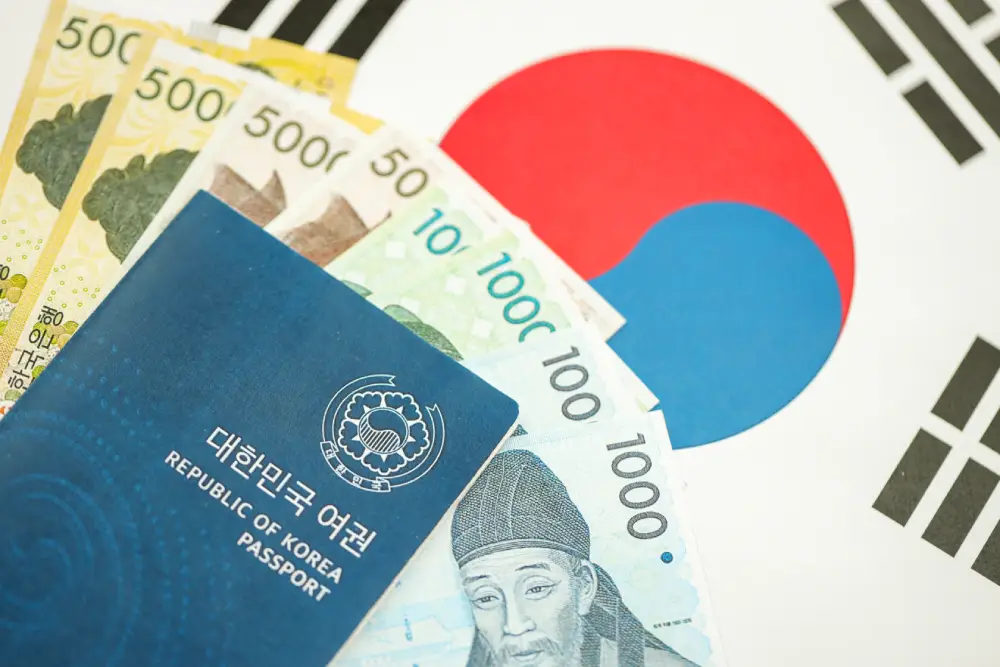
A “Main Character” lifestyle in Seoul requires a minimum of KRW 1.3 million (USD 910) per month, with food and rent making up nearly 70% of your total expenses.
2026 Monthly Expense Breakdown
| Expense Category | Monthly Estimate (KRW) | Monthly Estimate (USD) |
| Rent (One-Room/Studio) | KRW 700,000+ | USD 490+ |
| Maintenance Fee (Gwanlibi) | KRW 70,000 to KRW 120,000 | USD 49 to USD 84 |
| Food & Groceries | KRW 400,000 to KRW 600,000 | USD 285 to USD 425 |
| Transport (Climate Card) | KRW 55,000 to KRW 62,000 | USD 37 to USD 42 |
| Mobile Plan & Internet | KRW 50,000 to KRW 80,000 | USD 35 to USD 55 |
| Health Insurance | KRW 45,000 to KRW 75,000 | USD 30 to USD 50 |
| Total | KRW 1.3 million to KRW 1.9 million | USD 910 to USD 1,330 |
How much is rent in Seoul for international students?
Monthly rent in student districts like Sinchon or Hongdae is currently averaging KRW 650,000 to KRW 950,000 (USD 455 to USD 665), but the hidden hurdle is the mandatory security deposit.
Unlike many Western countries, Korea uses a “Wolse” (monthly rent) system that requires a high Security Deposit. In 2026, most landlords for a standard “One-Room” apartment will ask for a deposit between KRW 5 million and KRW 10 million (USD 3,500 to USD 7,000).
Common Housing Types & Costs
- Dormitories: KRW 500,000 to KRW 700,000/month (USD 350 to USD 490). Best for those on a strict budget with low deposits.
- Goshiwon: KRW 400,000 to KRW 900,000/month (USD 285 to USD 630). No deposit, including free rice/kimchi, but very tiny.
- One-Room (Studio): KRW 650,000+/month (USD 455). It requires a high deposit but offers total privacy and a kitchen.
Watch out for Gwanlibi: This is a monthly maintenance fee, typically KRW 50,000 to KRW 150,000 (USD 35 to USD 105) that covers building cleaning and sometimes water/internet. Always check if this is included in your monthly rent!
What is “Lunchflation” and how does it affect students?
Rising food costs have made it difficult to find a meal near campus for under KRW 10,000 (USD 7), leading students to rely more on convenience stores and cafeterias.
The term “Lunchflation” refers to the 20-30% spike in dining-out prices over recent years. While a bowl of Kalguksu (noodle soup) used to be KRW 7,000 (USD 5), it now sits closer to KRW 10,000 (USD 7).
Pro-Tips for 2026 Food Budgeting:
- University Cafeterias (Hak-sik): Still the best deal in the city at KRW 5,000 to KRW 7,000 (USD 4 to USD 5) per meal.
- Convenience Stores (Pyeonuijeom): A high-quality “Doshirak” (lunch box) at GS25 or CU costs about KRW 5,000 (USD 4).
- Market Shopping: Buy your fruit and vegetables at traditional markets (like Mangwon or Gwangjang) instead of major supermarkets to save 30%.
Transportation: The 2026 “Climate Card” Advantage
Seoul has one of the best transit systems in the world, and the 2026 “Climate Card” allows students to travel boundlessly for a fixed monthly fee.
If you are aged 19–39, you can get the Youth Climate Card starting at KRW 55,000/month (USD 37). This gives you unlimited access to:
- All Seoul Subway lines
- Partial Gyeonggi-serviced subway routes
- Seoul-licensed city and town buses
- Hangang Bus; If included, the rate is KRW 60,000/month (USD 42).
- “Ttareungi” (Seoul’s public bike-sharing system); If included, the rate is KRW 58,000/month (USD 41).
FAQ About Cost of Living in Seoul
-
Is it expensive to live in Seoul?
Yes. Seoul is the most expensive city in South Korea, mainly due to high rent and large housing deposits. While tuition is relatively affordable, daily living costs in the capital are noticeably higher than in regional cities like Busan or Daegu.
-
How much do I need to live comfortably in Seoul as an international student?
Most international students need KRW 1 million to KRW 1.6 million per month (USD 700 to USD 1,120), excluding tuition. This typically covers rent, food, transportation, utilities, and basic leisure, but does not include the upfront housing deposit.
-
How much is the rent in Seoul for international students?
Monthly rent for students usually ranges from KRW 350,000 to KRW 950,000 (USD 245 to USD 665), depending on the district, housing type, and proximity to universities. University dormitories and shared housing are cheaper alternatives.
-
Is the cost of living in Seoul high for international students?
Compared to other Korean cities, yes. The so-called “Seoul Premium” affects rent, dining, and entertainment costs. However, efficient public transport, student discounts, and affordable local food can help manage expenses.
-
How much is the average monthly rent for a one-bedroom apartment in Seoul?
A private one-room or studio apartment typically costs KRW 650,000 to KRW 950,000 (USD 455 to USD 665, with a key money deposit of KRW 5 million to KRW 10 million (USD 3,500 to USD 7,000) required upfront.
In Summary: How to Manage the Cost of Living in Seoul?
Surviving the cost of living in Seoul is not about skipping meals; it is about smart allocation. By anticipating the “Deposit Barrier,” using the Climate Card for transit, and embracing local dining over imported luxuries, you can live comfortably on a student budget. The “Seoul Premium” is real, but so is the value of the experience.
Ready to secure your spot? We help international students navigate the complex Korean housing market to find safe, verified apartments that fit their budget. Contact us for a consultation on low-deposit student housing.
Now that you know the costs, find the perfect area for your lifestyle. Read our Seoul Housing District Guide to explore the best student neighborhoods.