From mastering “Nunchi” to joining a university club, here is your insider guide to navigating student life in Seoul beyond the classroom.
Adjusting to student life in Seoul is about more than just language; it’s about mastering the unwritten rules of the city. It is a city where trends move at light speed, food delivery arrives in under 20 minutes, and the skyline never truly sleeps. However, for international students, the real challenge isn’t just the academics; it’s the unwritten social code.
In 2026, Seoul remains a “high-context” society. This means that what is unsaid is often more important than what is spoken. To thrive here, you need to understand the cultural pillars of respect, speed, and group harmony.
What You’ll Learn
- Pali-Pali (Hurry, Hurry): Expect life to move fast. Speed is a form of politeness in Korea.
- Nunchi (Reading the Room): Your most valuable survival skill. It’s the art of sensing others’ feelings without them saying a word.
- Sunbae/Hoobae (Hierarchy): Respect for seniority is the backbone of university social life.
- The Trash System (Bullisugeo): Environmental responsibility is strictly enforced; mismanaged trash can lead to heavy fines.
- Seasonal Awareness: You aren’t just fighting exams; you’re managing yellow dust in spring and humidity in summer.
On this page:
Is Seoul really that fast-paced? The “Pali-Pali” Culture
The “Pali-Pali” (Hurry, Hurry) mindset is the engine that drives Seoul, affecting everything from your internet speed to how fast you are expected to reply to a KakaoTalk message.
In Seoul, waiting is considered inefficient. This cultural trait is why Korea has the world’s fastest internet and same-day delivery. For students, this means:
- Digital Speed: When a professor or a group project member messages you on KakaoTalk, a quick response is often expected.
- Administrative Efficiency: Once you receive your RC (Residence Card), you’ll find that banking and identity verification happen almost instantly.
- The Pace of Dining: Unlike in Europe or the US, “leisurely” dinners are rare unless it’s a formal gathering. In student cafeterias, the goal is to eat quickly and make room for others.
What is “Nunchi” and why do I need it?
“Nunchi” translates to “eye-measure,” but it essentially means high-speed emotional intelligence; the ability to gauge the vibe of a room and act accordingly.
Having “good Nunchi” means you notice when a friend is tired before they complain, or you realize the conversation has turned serious and adjust your tone.
- Group Harmony: In a group project, if everyone is working silently, Nunchi tells you not to start a loud conversation.
- Social Cues: It’s about being “plugged in.” If you enter a room and everyone is seated, Nunchi tells you to find a seat quickly rather than standing and disrupting the flow.
How do age and status affect student life?
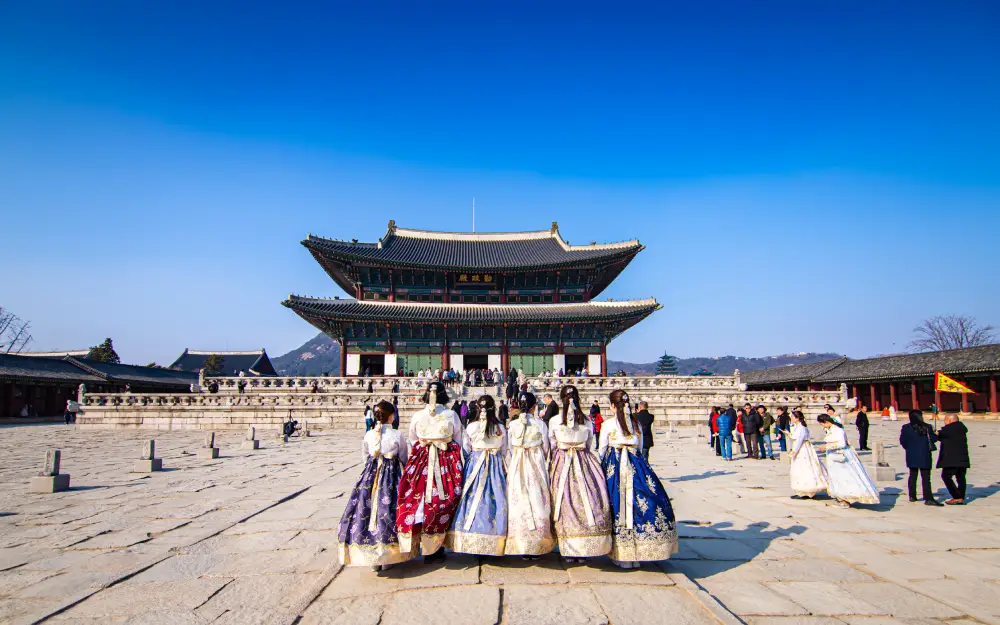
Korean university life is governed by a Confucian hierarchy known as the Sunbae (Senior) and Hoobae (Junior) relationship.
- Sunbae (선배): A student who entered the university before you. They are expected to mentor you and often pay for your meals during your first semester. You are expected to show them respect and use formal language (Jondetmal) unless invited to speak casually.
- Hoobae (후배): A student who entered after you. You are also expected to show them respect and use formal language (Jondetmal) unless invited to speak casually.
- The Two-Hand Rule: When giving or receiving anything, whether it’s a business card, a gift, or a shot of Soju, always use both hands to show respect.
How to be a good neighbor: Trash and Noise
Seoul’s “Bullisugeo” system means you cannot just throw trash into a bin; you must use specific, district-coded bags purchased from convenience stores.
- Recycling is mandatory: You must separate paper, plastic, glass, and vinyl. If you mix recyclables with general waste, your building manager will likely find you via CCTV and issue a warning.
- Food Waste (Eumsikmul): This is collected separately in special yellow bags. It must be squeezed of all moisture before being disposed of.
- Noise Etiquette: Because many students live in one-room or Goshiwons with thin walls, playing loud music or having late-night parties is a major social “no-go.” Noise complaints can lead to immediate tension with neighbors.
Further Reading
Learn how to find the right apartment setup and avoid noise complaints in our Seoul Housing District Guide.
How do I survive the seasons? Yellow dust, monsoons, and air pollution.
Adapting to Seoul means preparing for the “Hwangsa” (Yellow Dust) of spring and the intense humidity of the “Jangma” (Monsoon) season. With Seoul being a large metropolis, air pollution is also a concern throughout the year.
In Spring
Yellow dust blows in from the Gobi Desert. You will need to monitor the air quality and can wear KF94 masks on high-pollution days to protect your lungs.
In Summer
Monsoons bring weeks of heavy rain. A sturdy umbrella and a small dehumidifier for your room are non-negotiable to prevent mold in small studio apartments.
During all seasons
Air pollution consisting of PM10 (particles smaller than 10 micrometers) and PM2.5 (particles smaller than 2.5 micrometers) frequently blankets the city, often caused by stagnant air and seasonal winds. While PM10 can be filtered by your nose and throat, PM2.5 is small enough to enter your lungs and subsequently your bloodstream, making it more hazardous. It is highly recommended to use an air purifier indoors and check a reliable air quality app or website (like AirKorea) daily before heading out.
How do I break out of the “foreigner bubble”?
The most effective way to integrate into local life is to join a “Dongari” (University Club).
Many international students fall into the trap of only hanging out with other foreigners. Joining a Dongari (photography, hiking, or dance) forces you to speak Korean and understand the “work hard, play hard” mentality of local students.
- Commitment: Be aware that Korean clubs often require high commitment (meetings 2-3 times a week).
- MT (Membership Training): These are overnight club trips to the countryside designed for bonding. They are the fastest way to make lifelong Korean friends.
Further Reading
For a broader view of university choices and their specific campus cultures, read our complete guide to studying in Seoul.
What are the rules for dining and drinking?
Socializing in Seoul often centers around “Hoesik” (group dining), where specific drinking etiquette applies.
- Never Pour Your Own: It is considered bad luck. Always wait for someone to pour for you, and keep an eye on others’ glasses. If they are empty, offer to refill them.
- The Respect Turn: If you are drinking with a Sunbae or someone older, turn your head slightly away from them when taking a sip.
- No Tipping: Tipping is not part of Korean culture. The price you see on the menu includes tax and is exactly what you pay.
FAQ About Student Life in Seoul
-
Is it hard to make friends in Seoul as a foreigner?
It can be challenging if you stay in the “foreigner bubble,” but joining a Dongari (club) can help you gradually build Korean friendships.
-
How do locals treat international students in Seoul?
Locals are generally polite and helpful, especially near universities and tourist-friendly areas. While not everyone speaks fluent English, many are accustomed to foreigners and are willing to assist when approached respectfully.
-
Do I need to speak Korean to have a social life?
In student areas like Hongdae, many people speak basic English. However, to truly participate in club activities and form deep social bonds, learning basic Korean will drastically improve your experience.
-
What is the “vibe” of student life in Seoul?
It is a mix of high-pressure academics and high-energy social life. You will study hard, but you will also find yourself at a 24-hour cafe at 3:00 AM or a noraebang (karaoke) after a long week of exams.
-
Is Seoul socially welcoming or hard to adapt to at first?
Seoul can feel overwhelming at first due to language barriers and social norms, but most students adjust quickly. Joining university clubs, language exchanges, and student events makes it much easier to build friendships and feel at home.
In Summary: How to Master Student Life in Seoul?
True success in student life in Seoul comes down to your “Social IQ.” It is about more than just classes. It is about sensing the mood with Nunchi, keeping up with the fast-paced Pali-Pali speed, and respecting the local culture. When you embrace these unwritten rules, you stop being a visitor and start living like a local.
Contact us to find a university program with a strong international student support system.
Now that you know the culture, check our Seoul Housing District Guide to find a neighborhood that matches your vibe.