From the creative energy of Daeyeon-dong to the quiet value of Sasang, find the perfect Busan neighborhood to match your university campus and coastal lifestyle.
The best neighborhood to live in Busan isn’t just about the view; it’s about balancing “Campus Proximity” with the city’s unique linear geography. Unlike Seoul’s circular layout, Busan is split by mountains and sea, meaning a “10-minute walk” on a map can easily become a 20-minute hike. For international students, choosing the right base is the difference between a 15-minute commute and a 60-minute “tunnel crawl.”
What You’ll Learn
- The University Clusters: Students at Silla University should prioritize the Sasang Cluster, while Kyungsung University students thrive in the Daeyeon Cluster.
- The Seomyeon Pivot: As the central transfer hub, Seomyeon is the most strategic base for students who want to explore the entire city without owning a car.
- The Deposit Win: Busan’s “Key Money” barrier is lower; security deposits for private studios typically range from KRW 2 million to KRW 5 million (USD 1,400 to USD 3,500), making off-campus living highly accessible.
- Beach vs. Books: Gwangalli offers an iconic lifestyle, but students living here should budget for slightly higher rents and a 30+ minute commute to western campuses.
- Safety Standards: Neighborhoods like Daeyeon and Sasang are leading the 2026 “Smart City” initiative with enhanced CCTV and well-lit “Youth Streets” specifically for student safety.
On this page:
Is Busan a good place to live for international students?
Busan offers a “slower” big-city pace where you can spend your weekends hiking mountains or surfing at Gwangalli, all while being a short KTX ride from the capital.
For 2026, Busan has become the top choice for “Financial Realists.” You get the high-tech infrastructure of a global hub (ranked 8th in the world for Smart Cities) without the “Seoul Premium” on rent. The climate is significantly milder than in the north, and the local “Satoori” culture provides a warm, community-driven atmosphere that makes it easier to feel at home as a foreigner.
Pro Tip
Instead of chasing famous neighborhoods, match your housing to your university cluster. This is exactly how locals and long-term students choose where to live.
Sasang-gu: The Silla University Gateway
As the primary hub for Silla Universitystudents, Sasang offers some of the most budget-friendly private one-rooms in the city, with immediate access to Busan’s western transport hub.
Sasang is perfect for students who prioritize value and convenience.
- The Vibe: Local, industrial-chic, and incredibly practical. It’s home to the riverside Nakdong Park, perfect for sunset runs.
- Commute Reality: Most Silla students live near Sasang Station, where they can catch the free university shuttle bus.
- Pros: Lowest rent prices; direct light rail to the airport; 13 minutes to downtown Seomyeon.
- Cons: Further from the main beaches (Gwangalli/Haeundae).
Daeyeon-dong: The Kyungsung Cultural Hub
Daeyeon-dong is Busan’s version of Hongdae; a high-energy neighborhood where university life spills out into the streets, just a 10-minute bus ride from Gwangalli Beach.
If you are studying at Kyungsung University, this is your home.
- The Vibe: High-energy “Youth Streets” packed with 24-hour study cafes, international food, and photo booths.
- Commute Reality: You are a 5-minute walk from class and only 11 minutes from Seomyeon via Metro Line 2.
- Pros: Best social scene for international students; short distance to the sea; high density of newer officetels.
- Cons: Can be noisy on weekends; higher competition for the best rooms.
Insider Warning!
Tunnel bottlenecks and Line 1/2 congestion are real. Students who choose housing based on aesthetics often burn out mid-semester.
Seomyeon: The Central Downtown Hub
If you want to explore every corner of the city, Seomyeon is the most strategic base, offering a 13-minute commute to Sasang and an 11-minute ride to Daeyeon.
Seomyeon is where Metro Lines 1 and 2 meet. It is the heartbeat of Busan’s shopping and nightlife.
- The Vibe: Neon-soaked, fast-paced, and modern. It’s the city’s undisputed meeting point.
- The Middle Ground: It is roughly halfway between the western (Silla) and eastern (Kyungsung) university clusters.
- Pros: You never need a transfer to get anywhere; the best food and “Jeonpo Cafe Street” are at your doorstep.
- Cons: No ocean view; higher density of crowds and traffic.
Insider Warning!
Living in Seomyeon is efficient but mentally draining for some students, as noise, nightlife spillover, and weekend congestion aren’t obvious during daytime house viewings.
Gwangalli & Haeundae: Living the Beach Dream
Living near Gwangalli Beach is a 2026 bucket-list item for many, but be prepared for “tourist pricing” in local markets and a noisier environment during festival seasons.
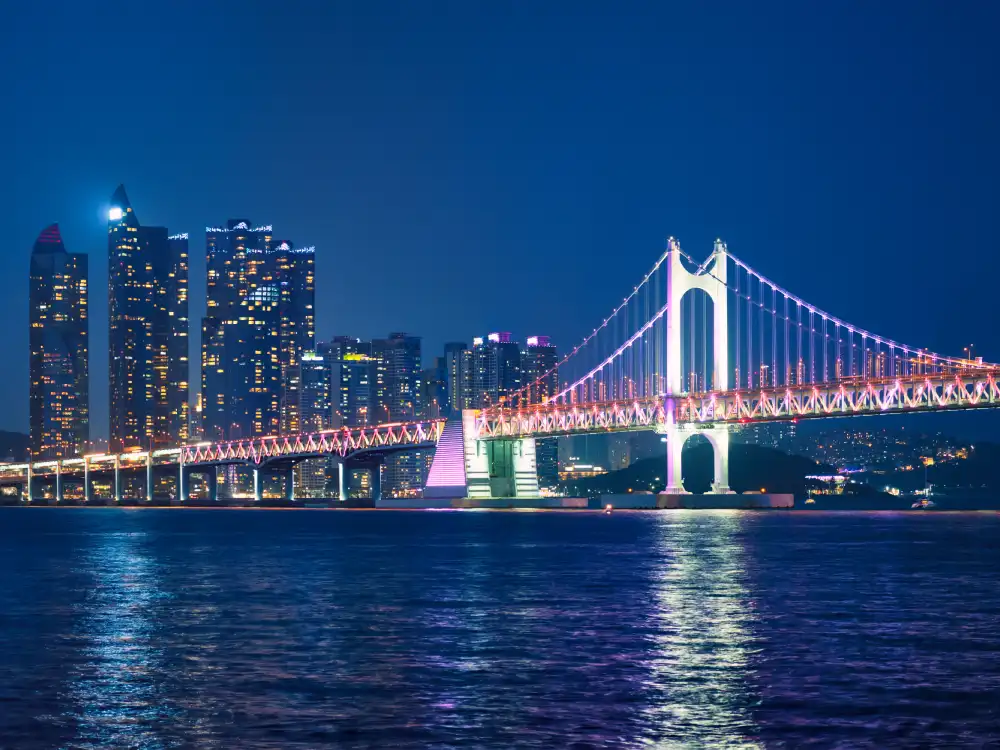
- Gwangalli: Preferred by students for its “Diamond Bridge” views and cozy, local-favored cafes. It’s only 2–3 subway stops from Kyungsung University.
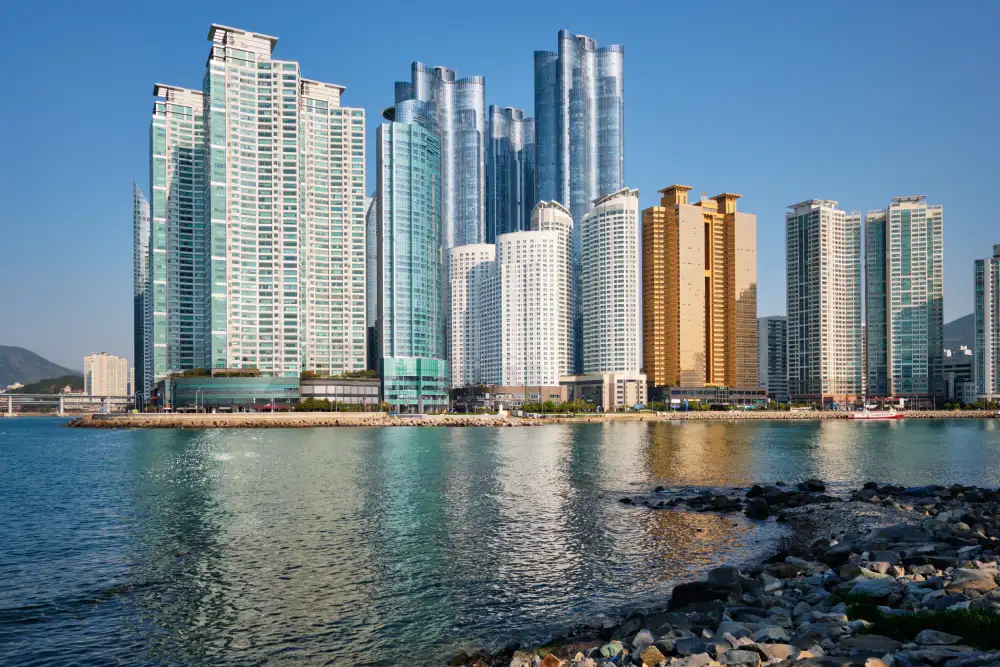
- Haeundae: The “Miami of Korea.” Higher-end, more expensive, and dominated by luxury officetels. It is great for weekends, but a long commute for Western-based students.
FAQ About Where to Live in Busan
-
Is Busan expensive to live in?
No. Monthly rent for a student “one-room” is generally 30–40% cheaper than in Seoul.
-
Where is the safest area for foreigners?
District safety is high city-wide, but Daeyeon-dong and Busanjin-gu (Seomyeon) have the highest density of 2026 Smart City safety features.
-
Is it better to live in Seoul or Busan?
Seoul is for career-driven “hustle”; Busan is for those who want a high-quality lifestyle, lower costs, and beach access.
-
Where is the best area to live in Busan as an international student?
All districts have their own appeal. At the end of the day, it depends on whether you’re drawn to a beach lifestyle or prefer a quieter, less crowded environment.
-
Does commute time matter when choosing where to stay in Busan?
While it’s easy to get around the city, it’s still recommended to stay close to your campus to minimize daily commute time.
In Summary: Best Neighborhoods in Busan for Students
Your “best” neighborhood in Busan is the one that minimizes your commute. If you are at Silla, look at Sasang or Seomyeon. If you are at Kyungsung, stick to Daeyeon or Gwangalli.
Found your ideal district, but scared of the contract? Contact us for consultation on finding student-friendly, visa-compliant housing near Silla or Kyungsung.
Now that you know the districts, check our Busan Cost of Living Guide to see your 2026 budget.