Home - Study in Korea - Cities to Study in Korea - Study in Seoul
Study in Seoul: Guide to Universities, Cost and Student Life
From the high-energy streets of Hongdae to the quiet halls of libraries, here is everything you need to know about studying in Seoul as an international student.

Deciding to study in Seoul is more than an academic choice; it’s a lifestyle upgrade. In 2026, the city remains the undisputed heart of South Korea’s education, culture, and career opportunities. However, the “Main Character” energy of living in a global megacity comes with a price tag; often referred to as the “Seoul Premium.”
Whether you’re drawn to Hongdae’s neon-lit energy or aiming for academic excellence at the prestigious SKY universities, this guide breaks down the logistics, the costs, and the reality of student life in the capital.
(Last Updated: February 2026)
What You'll Learn
- The Seoul Premium: Why rent and daily expenses in Seoul are significantly higher than in other Korean cities, and how this impacts your monthly budget more than tuition.
- SKY University Prestige: What studying at Seoul National, Yonsei, or Korea University really offers in terms of reputation, networking, and career leverage.
- Living District Vibes: How student neighborhoods in Seoul differ in pace, nightlife, housing styles, and day-to-day atmosphere.
- Housing Deposit Reality: How securing a private studio often requires a KRW 10 million (USD 7,000) upfront deposit, and what alternatives exist.
- English Track Limits: Why “English-taught” programs still require Korean for housing, admin tasks, and everyday student life.
Seoul: ideal study destination
Why choose to study in Seoul?
Deciding on studying in Seoul is about more than just picking a university. It is about choosing to live at the heart of South Korea. Seoul is not just the political capital; it is the undeniable center of the nation’s economy, culture, and entertainment.
Advantages of Studying in Seoul
For international students, the primary value of Seoul is proximity.
- Unmatched Networking: Almost all major Corporate HQs (Samsung, Hyundai, LG) and global branch offices are located in the Greater Seoul area. Being physically present here for interviews and industry meetups is a massive advantage for post-graduation employment.
- The Global Vibe: Seoul offers a blend of local tradition and international comfort that regional cities cannot match. From the diverse, expat-friendly streets of Itaewon to the indie music and fashion prowess of Hongdae, student life in Seoul is vibrant and endlessly convenient.
- University Towns: The city effectively functions as one giant campus. Areas like Sinchon and Anam are dedicated “university towns” catering specifically to students’ needs and budgets.
Disadvantages of studying in Seoul
The trade-off for these Seoul benefits is intensity. The city embodies the “Bali-bali” (hurry-hurry) culture.
- High-Pressure Environment: The academic and social pressure is palpable. The competition for grades, jobs, and housing is fiercer than anywhere else in the country.
- Cost of Living: Rent and deposits (“Key Money”) are significantly higher here than in cities like Busan or Daegu. You are paying a “Seoul Premium” for the convenience.
- Crowds & Pace: The subways are crowded, and the pace of life is fast. It requires resilience to adapt to the constant movement and noise of the capital.
Did You Know?
Seoul is home to over 30 major universities, meaning the city effectively functions as one giant campus with distinct “university towns” like Sinchon and Anam.
Further Reading:
Not sure if the fast pace is for you? Learn more in our guide to the best cities to study in Korea to see how Seoul compares to the national average.
Universities in Seoul of international students
Which Universities in Seoul are Recommended for International Students?
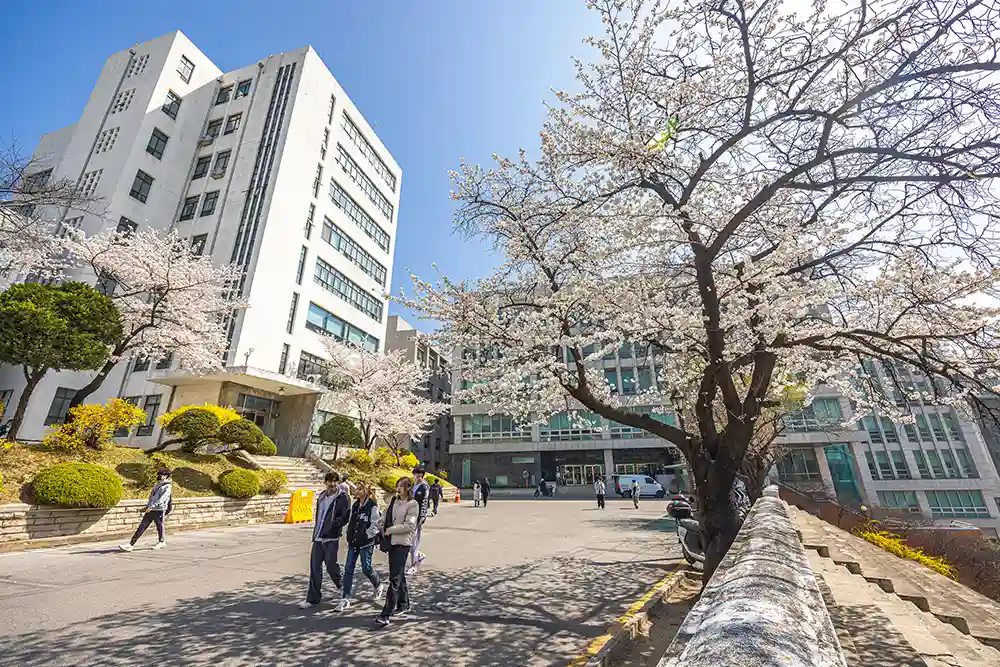
Seoul is home to the “SKY” trio, known as the Ivy League of Korea, but other specialized universities like Hongik and Hanyang offer world-class programs in arts and engineering.
According to the 2026 Global Excellence Rankings, the hierarchy is shifting. While prestige remains a top priority, international students are increasingly choosing schools based on English-taught support and career networking.
With over 30 institutions, choosing the right universities in Seoul for international students depends on your budget and your Korean proficiency. Seoul’s universities are generally categorized into three tiers.
The Prestigious "SKY" Universities
- Seoul National University (SNU): The top-ranked school in Korea. Best for students with high academic rigor and those aiming for research or government careers.
- Korea University (KU): Currently ranked #1 for international student support. Known for its strong alumni network and “Tiger” school spirit.
- Yonsei University: Located in the heart of Sinchon, it offers the best “vibe” for social students and is highly regarded for its business and international programs.
Specialized and Top-Tier Alternatives
- Hongik University: The gold standard for Art, Design, and Architecture.
- Hanyang University: Known as the “Engineer’s University,” it has incredible ties to Korea’s tech industry.
- Sungkyunkwan University (SKKU): A mix of ancient tradition and Samsung-backed modern tech facilities.
- Kyung Hee University: Famous for having the most beautiful campus in Seoul and top-tier hospitality/tourism programs.
Cost of studying in Seoul
How Much Does it Really Cost to Study in Seoul?
Living in Seoul is significantly more affordable than in London or New York, but it is the most expensive city in Korea, requiring careful budgeting for housing and “Key Money” deposits.
While tuition is relatively consistent across the country, your daily expenses in Seoul will be higher than in cities like Busan or Daegu. To live comfortably as a student, you should budget between KRW 1.2 million and KRW 1.6 million (USD $840 to USD $1,120) per month, excluding tuition.
Seoul Student Budget Breakdown
Living in the capital comes with a price. You will pay a “Seoul Premium” on almost everything compared to regional cities. The cost of living in Seoul for international students is roughly 20% to 30% higher than in Daegu or Busan, driven largely by housing deposits.
Here is a realistic monthly budget.
Expense Category | Monthly Estimate (KRW) | Monthly Estimate (USD) |
Rent (Goshiwon/Dorm) | KRW 450,000 to KRW 800,000 | USD 315 to USD 560 |
Food and Groceries | KRW 400,000 to KRW 600,000 | USD 285 to USD 425 |
Transport (Climate Card) | KRW 55,000 to KRW 62,000 | USD 37 to USD 42 |
Mobile Plan and Internet | KRW 50,000 to KRW 80,000 | USD 30 to USD 50 |
Health Insurance | KRW 45,000 to KRW 75,000 | USD 30 to USD 50 |
Total | KRW 1,000,000 to KRW 1,600,000 | USD 700 to USD 1,120 |
Expert Tip:
Don’t forget the “Climate Card.” This unlimited transit pass is a lifesaver for students. For around KRW 55,000/month (USD 37) (youth rate), you get unlimited subways and buses within Seoul.
Further Reading:
Master the subway and bus systems quickly with our guide to Seoul public transportation.
Can I work part-time while studying in Seoul?
Yes, you can work part-time while studying in Seoul but there are strict rules.
For D-4 visa holders, you qualify to work part-time after 6 months from your entry date to Korea. Your maximum working hours per week are then decided based on your Korean language proficiency. If you have a TOPIK Level 2 or higher, you can work up to 25 hours per week. If you do not have a TOPIK Level 2 or higher, you can only work up to 10 hours per week.
D-2 students face additional requirements when seeking part-time employment, including maintaining good academic standing and meeting any language or attendance criteria set by their university. In most cases, students are required to have at least TOPIK Level 3, with permitted working hours increasing as language proficiency improves. Restrictions may be relaxed or lifted on weekends and during official vacation periods, depending on individual circumstances and immigration approval.
Student districts in Seoul
Where to Live in Seoul as an International Student?
Choosing a neighborhood is just as important as choosing a major; your district defines your daily “Main Character” experience.
- Hongdae (Art and Nightlife): Best for Hongik students. It’s loud, creative, and filled with buskers. Rent is high, and rooms are small, but you are at the center of Seoul’s youth culture.
- Sinchon/Ewha (The Student Hub): Home to Yonsei, Ewha, and Sogang. It’s perfectly balanced with plenty of cheap student eats, study cafes, and easy access to the rest of the city.
- Gangnam (High-End and Career-Focused): Best for students at nearby schools like Hanyang. It is expensive and polished. Expect higher prices for everything, but world-class amenities and networking opportunities.
- Gwanak (The Budget Option): Near SNU. It is much quieter and more residential, making it one of the more affordable places to find a “One-Room” housing.
- Seongsu (The Ultimate Pop-up Hub): Known as the “Brooklyn of Seoul,” Seongsu-dong is a must-visit for trendy fashion, beauty, and food pop-ups. Located on Subway Line 2, it offers fresh and exciting brand experiences that change every single week.
Further Reading:
Find the neighborhood that fits your personality and budget in our Seoul Housing District Guide.
Deposit trap and Goshiwons
How Can I Find Housing in Seoul Without a Massive Deposit?
Finding cheap student accommodation in Seoul is the biggest hurdle for newcomers. The market moves fast, and the deposit system can be shocking.
The biggest surprise for international students is “Key Money” (bojeung-geum). Unlike Western countries, where you pay 1 or 2 months’ rent upfront, Seoul officetels and studios often require a deposit of KRW 5 million to 10 million (USD 3,500 to USD 7,000).
If you do not have this cash available, you will likely need to start in a Goshiwon or a university dormitory.
Table: Seoul housing comparison
Housing Type | Monthly Rent (Est.) | Deposit (Key Money) |
University Dorm | KRW 400,000 to KRW 600,000 (USD 285 to USD 425) | None |
Goshiwon | KRW 350,000 to KRW 600,000 (USD 245 to USD 420) | Low / None |
One-Room (Studio) | KRW 600,000 to KRW 1.2 million (USD 420 to USD 840) | High (KRW 5 million to KRW 10 million, USD 3,500 to USD 7,000) |
Share House | KRW 500,000 to KRW 800,000 (USD 350 to USD 550) | Low (KRW 1 million, USD 700) |
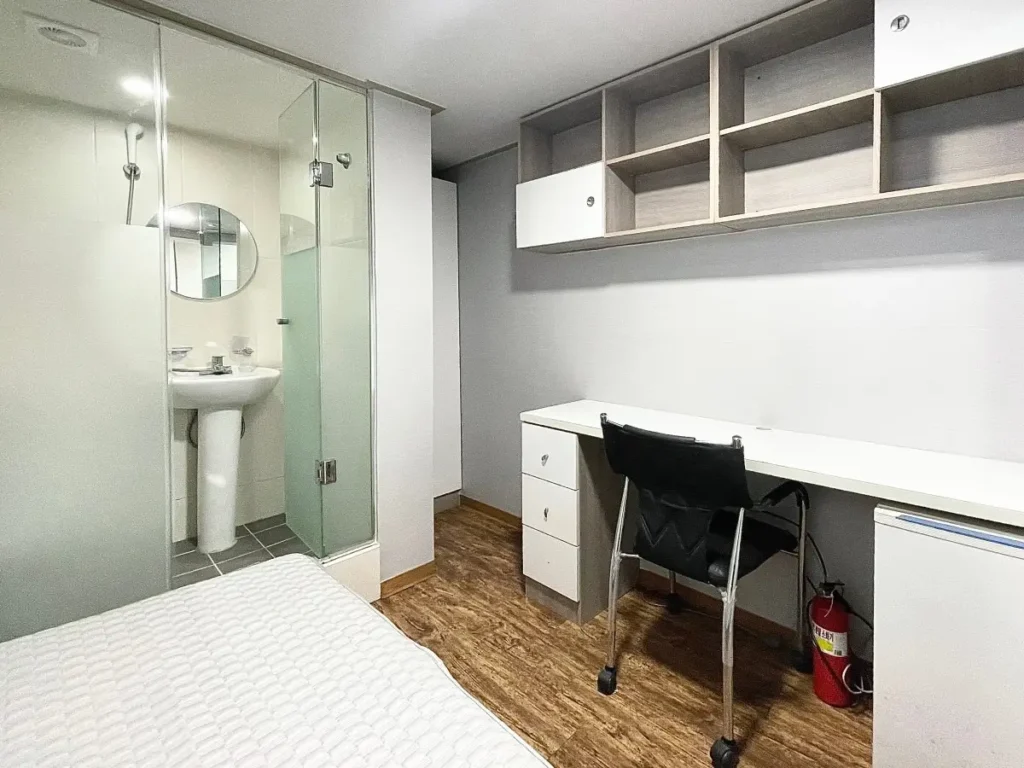
1. Goshiwon / Gositel
Tiny, private rooms that include a bed, desk, and often a private bathroom. The “pro” is that there is usually no deposit (or a very small one), and rent includes utilities and free rice/kimchi.
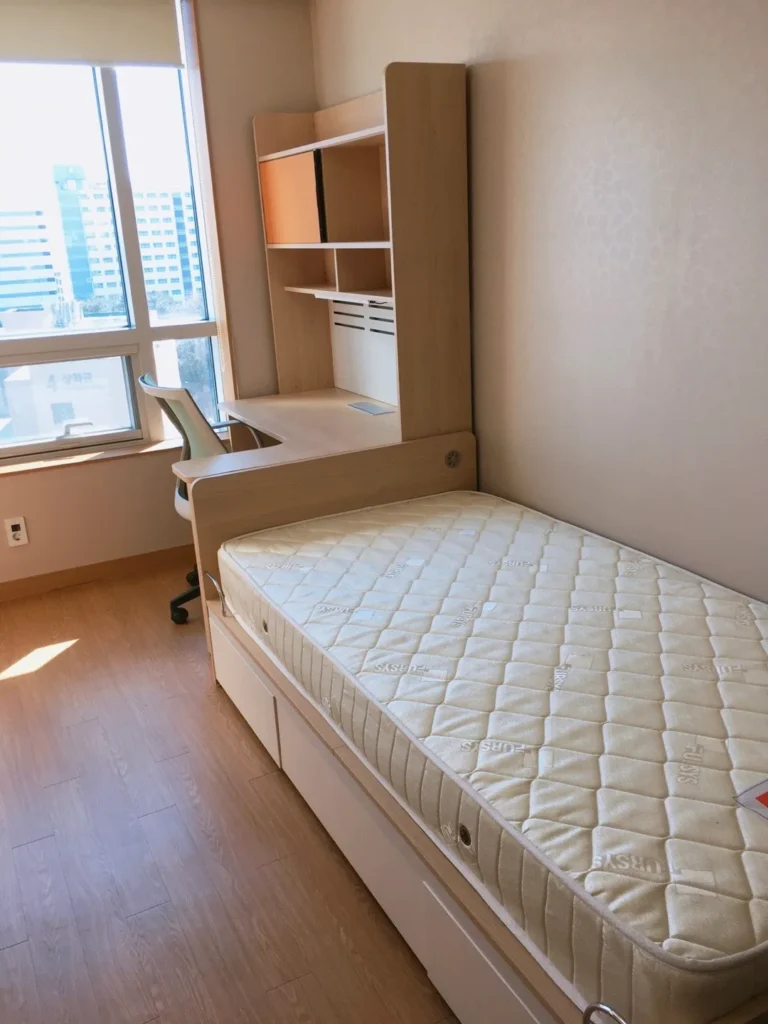
2. University Dorms
The safest bet for first-year students. They are affordable and conveniently located, though they often have curfews and strict rules.
Note:
Seoul is consistently ranked as one of the safest cities in the world. Most student housing areas are well-lit, monitored by CCTV, and have “Safe Return” services provided by the local government.
Further Reading:
Understand the practical realities of moving around the capital at night in our report on safety in Seoul.
FAQ
FAQ About Studying in Seoul
- How much does it cost to study in Seoul?
On average, international students spend KRW 1 million to KRW 1.6 million per month (USD 700 to USD 1,120), including rent, food, transport, and utilities. Tuition typically ranges from KRW 3 million (USD 2,100) to 7 million (USD 4,900), depending on the university and program. - Is Seoul a good place to study?
Yes. Seoul offers top-ranked universities, excellent public transportation, and strong internship and networking opportunities, making it ideal for students focused on academic prestige and career growth. - Is Seoul good for international students?
Seoul is very international-student-friendly, with large expat communities, English-supported services at major universities, and plenty of student housing areas like Sinchon and Hongdae. However, daily life outside campus often still requires basic Korean. - Is it expensive to study in Seoul?
Compared to other Korean cities, yes. The main expense is housing, especially high security deposits and rent, often referred to as the “Seoul Premium.” However, tuition itself remains relatively affordable compared to Western countries. - Which universities in Seoul offer the best English programs?
Top options include Seoul National University, Yonsei University, Korea University, Kyung Hee University, and Hanyang University. These schools offer English-taught degrees, exchange programs, and strong international support services.
Summary
In Summary: Is Studying in Seoul Really Possible?
Choosing to study in Seoul offers an incredible mix of academic prestige and cultural excitement that can launch your global career. While the opportunities are endless, the reality of the “Seoul Premium” means you must budget carefully for higher rent and deposits. By planning ahead, you can turn this financial challenge into a strategic investment in your future.
Dreaming of Seoul but worried about the cost? Contact us for a consultation to find a university that fits your budget.”
Want to know exactly how much rent costs? Check our Seoul Cost of Living Guide for a full breakdown.